
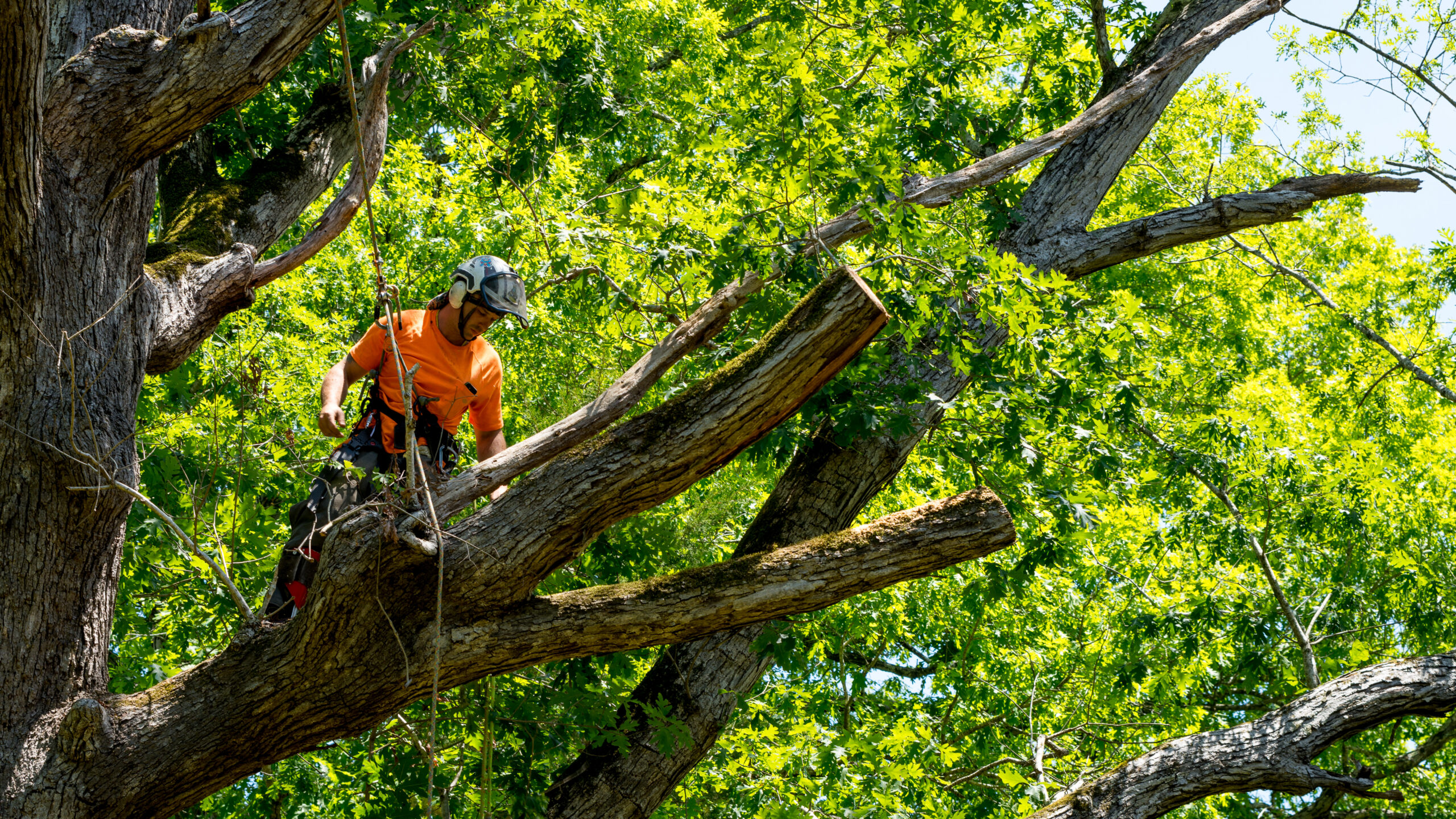
The best time of year for tree removal in the Treasure Valley is usually late fall through February, after the leaves drop and before spring growth starts. Dormant trees are lighter and easier to read, frozen ground protects lawns and sprinkler lines, fewer birds are nesting, and crews have more open dates. For any removal that can safely wait, Parker Tree Service recommends booking it for the dormant season. A tree that’s cracked, leaning or hanging over the house is the exception, and it shouldn’t wait for any season.
This guide covers timing only: why winter tree removal works well in Idaho, what changes across the year, how bird nesting season fits in, and when mountain properties need a different window. If you’re also planning winter pruning, inspections or snow-load care, our post on winter tree services covers that side of the season.
Why Dormant Season Tree Removal Works Best
Dormancy changes the tree, the ground under it and the crew’s calendar. Each one makes the job easier to plan and gentler on the yard.
Bare Branches Are Lighter and Easier to Read
A deciduous tree in full leaf carries a large volume of foliage that has to be cut, lowered and fed through the chipper. Once a silver maple, ash or cottonwood drops its leaves, every limb is lighter and the brush pile shrinks. Lighter pieces are easier to control on a rope over a roof or fence.
Bare branches also give the climber a clear view of the tree’s structure. Cracks, decay at branch unions and old pruning wounds are visible from the ground and from inside the crown. Rigging plans are easier to set and less likely to change mid-job.
Frozen Ground Protects Lawns and Irrigation
On cold days, frozen soil carries compact loaders and lifts across a lawn with far less rutting. In summer, the same lawn is soft and irrigated, so crews lay mats, carry wood by hand or keep equipment on the driveway.
Winter work also keeps heavy equipment off a running sprinkler system. Treasure Valley irrigation typically shuts off in fall, and lines are blown out before the freeze. Shallow sprinkler pipes and heads still sit just under the turf, so flag them either way.
Fewer Nesting Conflicts
Most songbirds nest from spring into midsummer. A winter removal avoids most of that overlap, so there’s less chance a planned job gets pushed while a nest finishes. More on that below.
Easier Scheduling
Demand for tree work peaks in spring and summer, and again after any windstorm. Winter calendars tend to be more open, which means more choice of dates and a better chance of fitting several trees into one visit. Grouping trees on one property lets the crew set up once and clean up once.
Pro Tip: Get the estimate in October or early November, not January. Booking ahead lets you pick a cold, dry week instead of waiting behind every call that comes in after the first big snow or windstorm.
Tree Removal Timing Compared Across the Year
| Season | Tree condition | Ground and lawn | Nesting birds | Scheduling |
| Late fall (after leaf drop) | Bare canopy, structure easy to see | Drying out after irrigation shuts off | Few active nests | Easing; good time to book ahead |
| Winter (December to February) | Fully dormant, lightest load | Frozen on cold days; mud on warm afternoons | Fewest active nests; some owls nest late winter | Most open outside storm events |
| Early spring (thaw) | Buds and sap flow starting | Soft and muddy, high rutting risk | Nesting begins | Filling quickly |
| Late spring and summer | Full leaf load, heavy brush | Irrigated, soft lawns; heat on crews | Peak nesting season | Busiest for planned work |
Can Trees Be Removed in Winter?
Yes. Trees can be removed all winter safely in the Treasure Valley, and many crews prefer it. Snow on the ground is rarely a problem by itself. A crew clears a path, sets a drop zone and works as usual.
What stops work is the weather around the tree. Ice on limbs makes climbing slow and unsafe. High wind stops work in the canopy. Short days mean a large removal may need an early start or a second day. A careful company tells you up front that winter dates can move and calls you when they do.
| The Messy Middle: Valley Winters Don’t Stay Frozen. Treasure Valley winters swing between hard freezes and mild spells. Ground that’s frozen solid at 8 a.m. can turn to mud by early afternoon on a sunny day. A loader that crossed the lawn easily in the morning can leave ruts on the trip back. The same freeze-thaw swing can leave ice on limbs, which makes climbing slower and less safe. A good arborist plans around it. Watch the forecast for a run of cold, dry days. Start early so heavy equipment crosses turf while the ground is still hard, and keep ground mats on site for the afternoon. When limbs are iced, reschedule rather than force the job. A one-day delay is easier to live with than a torn-up lawn or a climber working on slick bark. |
Tree Removal and Bird Nesting Season
The federal Migratory Bird Treaty Act protects the active nests of most native birds. A tree with an active nest in May may need to wait, or need a nest check before cutting. That can push a planned spring removal back by weeks.
Winter removals avoid most of that conflict, but not all of it. Some owls nest in late winter, and cavity trees can hold roosting birds year-round. A careful crew looks for nests and cavities before the first cut, in any season.
Field Note: If you know a tree has hosted a nest, mention it at the estimate visit. The arborist can check it and plan the date around it before the crew arrives.
Mountain Properties in McCall and Donnelly
Mountain lots run on a different calendar. Deep snowpack can bury the base of a tree and block driveways and access roads for months. For properties around McCall and Donnelly, a late-summer or fall removal before heavy snow arrives is often the better window. The goal is the same as in the valley: pick the time when equipment can reach the tree with the least disturbance. Our tree removal in McCall page covers mountain work.
Clearing Space for Spring Planting
If a replacement tree is going in, a winter removal leaves time to grind the stump and let the site settle before planting season. Removing in May and replanting in July puts a new tree into Treasure Valley summer heat, which is hard on new roots.
When Not to Wait for Winter
Timing only matters if the tree stays standing until then. Don’t hold a removal for the dormant season when:
- A large limb is cracked, hanging, or resting on the roof.
- The tree has started to lean more, or the soil on one side has lifted.
- A dead tree stands within reach of the house, a driveway, or a play area.
- A storm has split the trunk or a main limb.
In those cases, the risk of waiting outweighs any seasonal advantage. Our 24/7 emergency tree service handles active hazards, and our post on removing storm-damaged trees explains what to do right after a storm. If you’re not sure whether a tree can wait, a tree risk assessment from an ISA Certified Arborist answers that question before you commit to a date.
Pick Your Removal Window
| If… | Then… |
| The tree is healthy but unwanted | Schedule it for December through February and get the estimate in fall. |
| The tree is declining but stable | Have it assessed now and book removal for the dormant season. |
| Several trees need to come down | Group them into one winter visit to share setup and cleanup. |
| A bird is nesting in the tree | Wait until the nest is done, or ask the arborist to check it before any cutting. |
| The tree is on a mountain lot | Aim for late summer or fall, before snow blocks access. |
| There’s a crack, hanger or new lean | Don’t wait for winter. Have it assessed now, and call for emergency service if it’s over a house, drive or play area. |
The Bottom Line
- The best time of year for tree removal in the valley is roughly November through February, after leaf drop.
- Dormant trees are lighter and easier to read, frozen ground protects lawns and irrigation, and fewer birds are nesting.
- Get the estimate in fall so the work lands on a cold, dry winter week.
- Mountain lots are the exception: late summer or fall before snow.
- Hazard trees never wait for a better season.
Book a Dormant-Season Removal Estimate
Our ISA Certified Arborists look at the tree, the ground and the access, then tell you whether it can wait for winter or needs attention now. Request a free dormant-season removal estimate, or read how our Boise tree removal team handles cleanup and haul-away.
About the Author
Parker Tree Service is a family-run tree care company founded in 1937 by George “Brownie” Parker. Justin Parker manages the Treasure Valley business from Caldwell, Idaho, and the team includes ISA Certified Arborists. The company is licensed, bonded, and insured (Licensed Contractor RCE #26718).
Years in the industry: In business since 1937.
Technical focus for this guide: Seasonal scheduling of tree removals, site protection in freeze-thaw conditions, and hazard triage.
Professional profile: Parker Tree Service company history and team